1FINANCE, VIA DESIGNCOZ · PRINCIPAL PRODUCT DESIGNER · [YEARS]
What does it take to build
a zero-to-one product?
What does it take to build
a zero-to-one product?
India is the fastest growing economy in the world, and a generation is holding surplus wealth for the first time. They do not know a product exists to help them with it, and they have good reason to distrust anyone who offers. This is how I built one for them.


Personal advisory in India, three years ago
In most of the world, a financial advisor is a professional you hire. In India in 2023, it was something that happened to you. Products were sold on commission, so whoever told you what to buy was paid by whoever made it. Advice was not a service with a price on it, it was the thing that closed one.
In most of the world, a financial advisor is a professional you hire. In India in 2023, it was something that happened to you. Products were sold on commission, so whoever told you what to buy was paid by whoever made it. Advice was not a service with a price on it, it was the thing that closed one.
1Finance wanted the other thing: holistic, fee-only advisory, one plan across seven planning areas, paid for by the customer. Today it manages around $1.9B under advisory for more than 200,000 users. Three years ago it was six months of market research and an intention.
1Finance wanted the other thing: holistic, fee-only advisory, one plan across seven planning areas, paid for by the customer. Today it manages around $1.9B under advisory for more than 200,000 users. Three years ago it was six months of market research and an intention.
So the problem was never the interface. People were private about their money, the data sat scattered across institutions with no unified source of truth, and years of commission-led selling had taught everyone to distrust anyone offering help.
So the problem was never the interface. People were private about their money, the data sat scattered across institutions with no unified source of truth, and years of commission-led selling had taught everyone to distrust anyone offering help.
How do you get someone to start a journey they have never seen,
and do not yet know they need?
How do you get someone to start a journey they have never seen,
and do not yet know they need?
BEAT ONE
Define the shape
A zero-to-one product has no precedent to copy. Somebody has to decide what it is, what ships first, and how the pieces hold together, before a single screen can be drawn.


The promoters had commissioned six months of market research into the audience. There was an idea of what needed to be built, but no clear picture of where to start or how. That was my job.
The promoters had commissioned six months of market research into the audience. There was an idea of what needed to be built, but no clear picture of where to start or how. That was my job.
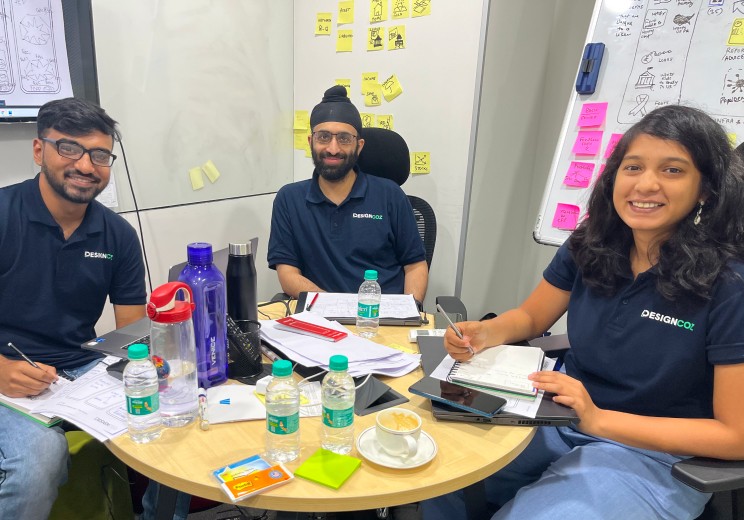
I began by working the research until I understood the evidence: who these customers were, and how they looked at money. Then the definitions happened in workshops, three types, each with a different room and a different question.
I began by working the research until I understood the evidence: who these customers were, and how they looked at money. Then the definitions happened in workshops, three types, each with a different room and a different question.
Product Vision Framing: What are the promoters building, and what does it look like in five years. They came out of broking and retail financial services, so they knew the products cold. What the vision had to settle was the shape of the offering itself: what a customer receives for a fee, what the firm will never sell them, and what that adds up to over five years rather than at launch.
Product Vision Framing: What are the promoters building, and what does it look like in five years. They came out of broking and retail financial services, so they knew the products cold. What the vision had to settle was the shape of the offering itself: what a customer receives for a fee, what the firm will never sell them, and what that adds up to over five years rather than at launch.
Prioritisation & MVP Scope: What ships first. Holistic advice is seven planning areas, and the workshop existed to force one decision: which one we lead with, and which ones wait. The value was the forcing function, not the ideas.
Prioritisation & MVP Scope: What ships first. Holistic advice is seven planning areas, and the workshop existed to force one decision: which one we lead with, and which ones wait. The value was the forcing function, not the ideas.

Service Blueprinting: Then the architecture, which was the real work. Three journeys had to be true at once, the customer's, the advisor's, and the financial plan itself, and they do not run in parallel, they cross. A customer's next action is an advisor's task is a line in the plan. The blueprint was where that crossing became visible, and the information architecture was what decided whether the three stayed in sync or quietly drifted apart.
Service Blueprinting: Then the architecture, which was the real work. Three journeys had to be true at once, the customer's, the advisor's, and the financial plan itself, and they do not run in parallel, they cross. A customer's next action is an advisor's task is a line in the plan. The blueprint was where that crossing became visible, and the information architecture was what decided whether the three stayed in sync or quietly drifted apart.

You cannot design a screen until you know which of seven planning areas ships first,
and what happens to the other six while it does.
You cannot design a screen until you know which of seven planning areas ships first,
and what happens to the other six while it does.
BEAT TWO
BEAT TWO
One system, multiple variations
One system, multiple variations
The blueprint established what had to exist. The next question was how much of it each person should see.

A blueprint gives you the parts and how they connect. It does not tell you what any one person should be shown of it, and in advisory that is not a detail, it is the product. So the next layer of work was variation: the same system, rendered differently depending on who was reading.
A blueprint gives you the parts and how they connect. It does not tell you what any one person should be shown of it, and in advisory that is not a detail, it is the product. So the next layer of work was variation: the same system, rendered differently depending on who was reading.
A living brand is a company's ethos turned into experience. A customer meets one advisor at a time. For that to feel like a consistent, united front, the system behind it has to be built for collaboration by default.
A living brand is a company's ethos turned into experience. A customer meets one advisor at a time. For that to feel like a consistent, united front, the system behind it has to be built for collaboration by default.
A financial plan is not one person's work. Several specialists each read the same customer through their own lens, tax, insurance, investments, liabilities, and a primary advisor drives the plan, reconciling those inputs and owning it as a whole. The system has to consolidate all of that so what reaches the customer is one holistic plan, not a set of expert opinions arriving separately.
A financial plan is not one person's work. Several specialists each read the same customer through their own lens, tax, insurance, investments, liabilities, and a primary advisor drives the plan, reconciling those inputs and owning it as a whole. The system has to consolidate all of that so what reaches the customer is one holistic plan, not a set of expert opinions arriving separately.
So the same data had three readers. The specialist makes. The primary advisor checks and drives. The customer receives.
So the same data had three readers. The specialist makes. The primary advisor checks and drives. The customer receives.
Same data, three representations. Each role derives something different from the same figures, so what counts as supporting evidence changes with the reader, and so does how much detail is shown, and where. Information density was the design variable, not content.
Same data, three representations. Each role derives something different from the same figures, so what counts as supporting evidence changes with the reader, and so does how much detail is shown, and where. Information density was the design variable, not content.
Take life cover for a primary earner with three dependents.
The insurance specialist works the sizing: cost of living carried forward, inflated across the years the family would need it. That calculation is their whole view.
The insurance specialist works the sizing: cost of living carried forward, inflated across the years the family would need it. That calculation is their whole view.
The customer does not want the calculation. He wants to know how his family carries on without him. Same number, read as an outcome.
The customer does not want the calculation. He wants to know how his family carries on without him. Same number, read as an outcome.
And the primary advisor sees what neither of them raised. A payout that size is an estate question, so will planning has to enter the plan now, which the insurance specialist would never introduce, because it sits outside their lens.
And the primary advisor sees what neither of them raised. A payout that size is an estate question, so will planning has to enter the plan now, which the insurance specialist would never introduce, because it sits outside their lens.
The rule underneath all of it: nothing reaches the customer until the plan reads as one decision.
The rule underneath all of it: nothing reaches the customer until the plan reads as one decision.
Several specialists, one plan, one view for the client.
70% of people finished a 25-question survey to get into it, cold, with no relationship to the brand.

"Three readers, one truth. The moment they drift apart, the advice stops being believable."
BEAT THREE
Build & Iterate
Build & Iterate
With the architecture holding, real customer behaviour could decide the rest.
That is the point of building a spine first. You keep what works and change what the customer tells you to change, without the foundation moving underneath you.
That is the point of building a spine first. You keep what works and change what the customer tells you to change, without the foundation moving underneath you.
But feedback is not instruction. Customers tell you what is not working, rarely what to do instead, and sometimes what they ask for is the thing that would damage the business. The judgement is knowing which you are looking at. The first of these was a lesson in listening. The second was a lesson in not simply doing what was asked.
But feedback is not instruction. Customers tell you what is not working, rarely what to do instead, and sometimes what they ask for is the thing that would damage the business. The judgement is knowing which you are looking at. The first of these was a lesson in listening. The second was a lesson in not simply doing what was asked.
EXAMPLE ONE · LISTENING
Leading with financial planning, and nobody came in.
The first onboarding did what the research and the compliance flow both assumed: explain personal financial planning, verify identity, then begin. People did not weigh it up and decline, they did not arrive at all. The concept had nothing to attach to, and we were asking a private market for its documents before giving anything back.
The first onboarding did what the research and the compliance flow both assumed: explain personal financial planning, verify identity, then begin. People did not weigh it up and decline, they did not arrive at all. The concept had nothing to attach to, and we were asking a private market for its documents before giving anything back.
So I stripped it to one thing. We led with MoneySign, the patented framework that reads a customer's financial behavioural archetype and returns one of eight results. Not learn about financial planning, but find out your MoneySign, which was worth telling someone about. Then I took KYC back to compliance and established that we were not giving advice yet, only revealing a MoneySign, so it could be deferred until there was a relationship to protect.
So I stripped it to one thing. We led with MoneySign, the patented framework that reads a customer's financial behavioural archetype and returns one of eight results. Not learn about financial planning, but find out your MoneySign, which was worth telling someone about. Then I took KYC back to compliance and established that we were not giving advice yet, only revealing a MoneySign, so it could be deferred until there was a relationship to protect.
Twenty-five questions, no documents, no account. 70% completion, cold, and every completion brought the next person in.
Twenty-five questions, no documents, no account. 70% completion, cold, and every completion brought the next person in.


EXAMPLE TWO · REFRAMING
Leading with tax, and nearly becoming a tax company.
The second correction ran the other way, and doing what customers asked would have been the wrong call. They understood tax. They asked for it by name, it converted, and every signal said lean in. But a firm that sells tax help becomes a tax firm, and answering only what customers already had words for would have rebuilt the fragmented model we set out to replace.
The second correction ran the other way, and doing what customers asked would have been the wrong call. They understood tax. They asked for it by name, it converted, and every signal said lean in. But a firm that sells tax help becomes a tax firm, and answering only what customers already had words for would have rebuilt the fragmented model we set out to replace.
So instead of narrowing the product to the request, I used the request as the way in. Tax stayed as the entry point, but the messaging and the price anchoring changed around it, so what a customer bought was the plan, with tax as the familiar door into it. The demand was real. What it was asking for was not a tax product, it was a starting point people recognised.
So instead of narrowing the product to the request, I used the request as the way in. Tax stayed as the entry point, but the messaging and the price anchoring changed around it, so what a customer bought was the plan, with tax as the familiar door into it. The demand was real. What it was asking for was not a tax product, it was a starting point people recognised.
What it takes
Building zero to one took three things. A shape, decided before anything was drawn. An architecture that let one set of facts serve three different readers. And the discipline to ship the smallest true piece of it, then let customers correct the rest.
Building zero to one took three things. A shape, decided before anything was drawn. An architecture that let one set of facts serve three different readers. And the discipline to ship the smallest true piece of it, then let customers correct the rest.
None of that is won by looking trustworthy. It is won by the order in which you ask for things, and by coherence. A customer will forgive a plan that is cautious. They will not forgive two experts at the same firm telling them different things.
None of that is won by looking trustworthy. It is won by the order in which you ask for things, and by coherence. A customer will forgive a plan that is cautious. They will not forgive two experts at the same firm telling them different things.
The same pattern runs through my underwriting work. People accept a system's version of events when they can see how it got there.
The same pattern runs through my underwriting work. People accept a system's version of events when they can see how it got there.
back to home
TELL ME WHICH SURFACE NEEDS A DESIGNER.
UK-based, full working rights.
I write short notes on the design I notice off-screen.

READ NOTES

